I haven’t posted for some time. The biggest reason for this lack of activity is that I enrolled last fall at Grimké Seminary of Richmond, Virginia. Grimké is predominantly a self-study program, with two weeks each semester devoted to in-person, on-site learning. It is designed for pastoral training for men who may already be working in their local church. Many of my fellow students are pastors in need of additional study. You can find out more about Grimké here.
When I graduated from college back in 1980 (B.A., Ashland University), my plan was to go to seminary. But then, life happened. Marriage, career moves, and children all served to put the seminary plan on the back burner (and eventually off the stove entirely).
So, imagine my surprise after my retirement from daily work in 2022 to find out about Grimké Seminary and how easy it would be for me to get back into that track. At this point in my life (I was 68 when I enrolled), I’m not looking for any major career movement, but as a lay elder in my church, I am looking to deepen the reservoir of knowledge and wisdom from which I can draw in my various ministry opportunities. So, I enrolled in a Master of Theological Studies program, with the plan to finish in about two to three years.

I want to share some reflections on my journey so far.
There’s a lot of reading. In this past spring semester, I enrolled in three courses. Over the eleven weeks of self-study, I read all or portions of sixteen different books, with a total of 3,575 pages. That averages out to about 108 pages per week per class. Some of this reading is fairly academic, and some is written on a more popular level. Reading tip: If I can get the audio version of the book, I find it best to listen while I read along. With only listening, I would not get the most out of my texts. With reading alone, some of these books are a slog and I would become distracted and bogged down.
There’s a fair amount of writing. In the spring, I wrote 8 papers, totaling about 13,500 words. This aspect of my studies is not as difficult as it might be for others, for I have devoted a good portion of the last three years to writing two books and numerous blog posts. So, when I sit down to write, the words come relatively easily, and I struggle to edit my papers down to the required word count.
The relationships among students and between students and faculty are the highlights. Each time I make the drive to Richmond to attend classes, there is great anticipation. There is no work to complete during those weeks, so we’re free to hang out and share times of conversation with each other. Each day ends with a chapel service that features men singing (!) with gusto their praise to Jesus Christ as well as a message that brings home the reason we’re all there – to minister within our own local churches.
Looking back over both semesters, here are some of my thoughts regarding each class.

Hermeneutics and Exposition
This class was basically how to study the Bible and how to teach or preach it. Much of the early material was a matter of review for me, but as the class progressed, it was more engaging. Favorite text: Come and See by Jonathan Pennington. This was a brand-new book that gives a fresh perspective on Bible study. I eventually led a small-group study on this book in my church. Lasting impression: We were introduced to The Quadriga, a “layered,” allegorical method of Scripture interpretation. Initially suspicious of allegorical renderings of the text, I discovered that this was an honored method throughout the Middle Ages. Supposedly, the Reformation “rescued” us from that, but there has been a resurgence in later years. Much of my skepticism of this continued and was addressed in subsequent classes, as I began to see that reading allegorically is not always the mess that medieval scholastics made but often follows the patterns that the New Testament writers followed in their reading of the Old Testament.

Introduction to Church History
I had had a church history class in my undergraduate days, and it wasn’t my favorite. But I was happy to see that the main text of this class (The Story of Christian Theology) was not a survey of names and dates, but a review of how Christianity’s theology developed over time, particularly as it relates to the question of how people are saved. Favorite text: Know the Creeds and Councils by Justin S. Holcomb. This, along with the companion volume Know the Heretics, should be required reading for every churchgoer. Lasting impression: The early church councils and the creeds they produced were not attempts to explain the deity-humanity of Christ or the nature of the Trinity but were made to protect the mystery of biblical truth. Attempts to “nail down” or explain these doctrines resulted (and continues to result in) theology that is heretical and less than biblical. Know your church history!

Old Testament Survey
This class is generally regarded as the best class at Grimké, and I can see why. Beyond the reading, the class lectures by Prof. Doug Ponder were extraordinary. Fortunately, though he moves pretty fast, he provided extensive notes for us which will be a resource in our ongoing ministries. Favorite text: It’s hard to choose, as we had several good ones. I’ll go with Jesus on Every Page, by David Murray. This was an extremely helpful book for every Christian in learning how to see that the whole Bible is about Jesus Christ. This work furnished some helpful boundaries as well, so that we don’t go crazy with assigning allegorical meaning where it might not be appropriate. Lasting impression: I will not look at the Old Testament the same again. While I previously had a sense of the Christ-centeredness of the Old Testament, that insight now pervades my reading of the text, keeping in mind the boundaries of good interpretation and hermeneutics.
Introduction to Apologetics
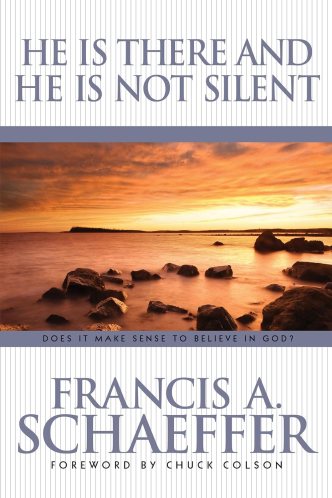
This was the first elective (non-core) class in which I enrolled. A wide range of reading led us through a classic like Mere Christianity by C.S. Lewis and the robust Reasonable Faith by William Lane Craig. The latter was extremely technical, and were it not for the audio version, I would probably still be working my way through it. The class sessions were insightful and timely, as we had a deep dive on the exclusivity of Jesus Christ just as my church was doing a sermon series that covered that very topic. Favorite text: He Is There and He Is Not Silent by Francis Schaeffer. This is a classic work that I’d read before, but it is such a concise, succinct text that it’s a top-10 book for me overall. Lasting impression: In the cultural milieu in which we find ourselves, the issue for a modern unbeliever is not so much Is Christianity true? but Is Christianity good? Our apologetic needs to extend beyond intellectual arguments to more visceral matters.

Theology 1

Because theological study is a delight of mine whether I’m in a class or not, this was my most eagerly awaited class. It did not disappoint. As a whole, the texts for this course were more scholastic and rigorous than in other courses. Classroom discussions drew out what kind of theology we ought to have (“gospel theology”) and how that ought to reflect the over-arching teaching of the text of Scripture. Time was spent on how the method of our theology is just as important as content of our theology. We even had a conversation on the doctrine of sin right before I was to preach on it. Favorite text: This is a tough one, since every book for this class was superb. It’s hard not to call Knowing God, for example, my favorite, when it’s a top-5 book for me, but for this class I’m going to prefer The Christian Faith by Michael Horton. [Note: In the spirit of Wayne Grudem, Horton has an abridged version, Pilgrim Theology, and a small version, Core Christianity.] We covered the first half of Horton, with the second half coming in the Fall ’24 semester for Theology 2. The Christian Faith takes a more philosophical, less topical approach to systematic theology. While not abandoning Scripture, Horton draws a systematic “street map” over the topographical map of Biblical Theology. This was reinforced by another of our texts, The Fabric of Theology, by Richard Lints. Lasting impression: Owing to Horton’s covenantal approach to redemption, I now have a broader understanding of God’s work in rescuing and redeeming a people, going down to the basis for the entire narrative of Scripture – the Covenant of Redemption made among the members of the Trinity in eternity past. This doesn’t so much change the particulars of my theology – for example, my book Ordo: the ordo salutis for everyone would not change greatly if I were writing it today – but this deeper foundation confirms to me that I was on the right track and gives me confidence to continue to write on such matters.

Moving ahead
For Fall 2024, I look to take two more core classes – New Testament Survey and Theology 2 – as well as a TBD elective course. That will put me on track to graduate in Fall 2025, with some flexibility on how many enrollments to take in those last two semesters. Since we’re all on different parts of the journey, each semester going forward, I will make new friends and say so long to others as they graduate.
If you are looking for a great discipleship/training course for your local church, check out Grimké College, a one-course-at-a-time approach designed to enhance, not overshadow, your ongoing service to the local church. Start a new course immediately or three months later, whatever your season of ministry requires.
 ordo salutis